
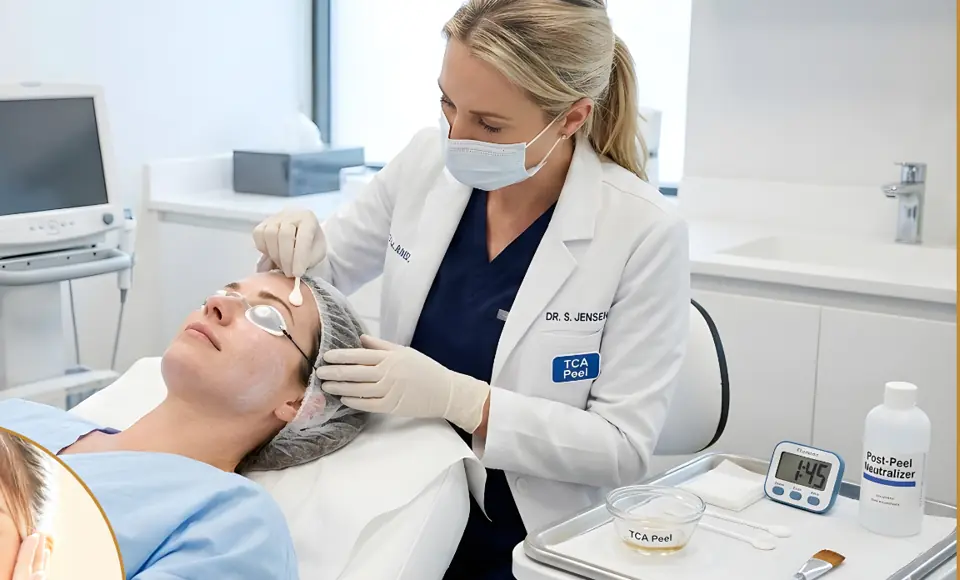
TCA peel recovery usually takes about a week for the visible stage, with redness and tightness on day one, peeling from around days two to four, and most flaking settled by day seven. Skin then continues to improve for several weeks as collagen renews. Knowing the timeline helps you plan your diary and resist the urge to pick.
Why a TCA peel has a recovery period
Trichloroacetic acid (TCA) is a medium-depth peel. It removes the outer layer of skin and reaches into the upper part of the layer beneath, which is why it can help with acne scarring, pigmentation and texture that lighter peels have not shifted. That depth is also what creates a visible healing phase: the treated layer has to shed so new skin can come through. The strength used, your skin type and the area treated all affect how intense recovery feels, so your own experience may be lighter or heavier than the outline below.
Your recovery, day by day
Day 0: treatment day
During the peel you will usually feel warmth, tingling or stinging, which eases once the solution is neutralised and soothing products are applied. Afterwards skin can look pink or flushed, similar to mild sunburn, and may feel warm. Some people notice a slightly frosted or uneven tone straight after treatment. Head home and keep the evening quiet.
Day 1: tight and red
Skin often feels tight, dry and a little shiny, as if it is a size too small. Redness may be more noticeable than on the day of treatment. Mild swelling, particularly around the eyes, can happen. Cleanse gently with lukewarm water and use only the products you have been advised to use.
Days 2 to 4: peeling begins
This is the stage people tend to remember. Skin may darken slightly and look leathery before it starts to crack and flake, often beginning around the mouth and nose, where the face moves most. Peeling can be fine and powdery or come away in larger sheets. It looks dramatic but is a normal part of renewal. Let it shed on its own: pulling it off early can expose skin that is not ready and increase the risk of marks.
Days 5 to 7: settling down
Peeling gradually reduces as fresh skin appears underneath. The new skin is usually pinker and more sensitive than you are used to, and may still feel dry. Most people feel comfortable going about their normal routine by the end of the week, often with some lingering flaking along the jaw or hairline.
Week 2: fresh skin
Skin typically looks brighter and smoother. Any remaining pinkness tends to fade over the following days or weeks. Your skin is still delicate, so sun protection matters more now than at any other point.
Weeks 4 to 8: the results build
Underneath the surface, collagen renewal continues, which is why texture and tone can keep improving for weeks after the peeling has finished. This is also the window in which your practitioner can judge whether a further peel or a different treatment would help.
| Timeline | What is common | Focus |
|---|---|---|
| Day 1 | Tightness, redness, mild swelling | Gentle cleansing, moisture, rest |
| Days 2 to 4 | Darkening, cracking and visible peeling | Hands off; let skin shed |
| Days 5 to 7 | Peeling eases; new pink skin shows | Moisturise and protect |
| Week 2 | Brighter, smoother surface | Daily high-SPF sunscreen |
| Weeks 4 to 8 | Ongoing texture and tone improvement | Review progress and next steps |
Looking after your skin while it heals
How you care for your skin in the first fortnight has a direct effect on your result. The core rules are:
- Do not pick, peel or scrub. Snip loose flakes with clean scissors if they catch, but never pull them.
- Keep skin hydrated. A plain, bland moisturiser helps with tightness and makes peeling more comfortable.
- Stay out of the sun. Avoid direct sun exposure and wear a high-SPF sunscreen every day once your practitioner says it is safe to apply.
- Pause active skincare. Retinoids, exfoliating acids, vitamin C and scrubs should be stopped until you are advised to restart them.
- Avoid heat and sweat. Saunas, steam rooms, hot baths and intense exercise can increase redness and irritation in the first few days.
Make-up is best avoided while skin is actively peeling, as it tends to cling to flakes and irritate. Ask at your appointment when it is safe to restart your usual products.
Warning signs: when to contact the clinic
Discomfort, tightness and peeling are expected. Contact the clinic promptly, or your GP or NHS 111 out of hours, if you notice:
- Pain that gets worse rather than better after the first day or two
- Yellow crusting, pus, increasing heat or spreading redness, which may suggest infection
- Blisters, or small painful clusters around the lips, which can be a cold sore flare
- Patches of skin that become noticeably darker or lighter as you heal
- Swelling that is severe, or that affects your eyes or breathing
Tell us before treatment if you are prone to cold sores, as peels can trigger an outbreak.
Planning your peel around your life
A TCA peel in Liverpool is a 60-minute appointment priced at £250, and every treatment starts with a skin assessment. Because of the visible peeling, it helps to book when you can keep a low profile for about a week, and to leave at least two weeks before any important event. Many people find autumn and winter easier, as there is less strong sunlight to avoid.
A TCA peel is not suitable for everyone. It may be postponed or avoided if you are pregnant or breastfeeding, have an active skin infection, open wounds, certain inflammatory skin conditions or very sensitive skin, or have had a recent facial procedure that has not healed. Deeper skin tones need careful assessment and often a gentler approach, because medium-depth peels carry a higher risk of pigment change.
If you are still deciding between resurfacing options, our comparison of chemical peels vs microneedling explains how the two differ. And if scarring is your main concern, it is worth reading acne scar types explained, as deeper scars often respond best to a combination plan rather than a peel alone.
Frequently asked questions
How long does peeling last after a TCA peel?
Usually around three to seven days, depending on the peel strength and your skin.
Can I go to work during TCA peel recovery?
Many people do, especially in non-public-facing roles, but peeling is visible around days two to five, so plan accordingly.
When can I wear make-up again?
Once peeling has finished and your skin is no longer raw, usually towards the end of the first week. Check with your practitioner first.
Why has my skin gone darker before peeling?
Treated skin often darkens slightly before it sheds. This is common and normally lifts as it peels away.
Book a consultation in South Liverpool
If you would like to find out whether a TCA peel suits your skin, book an assessment at our clinic at Business First Centre, Goodlass Road (L24). Book online or call 0151 804 4207 to talk it through.
This guide is general information and not a substitute for a personal consultation. Suitability for any treatment is assessed individually.