
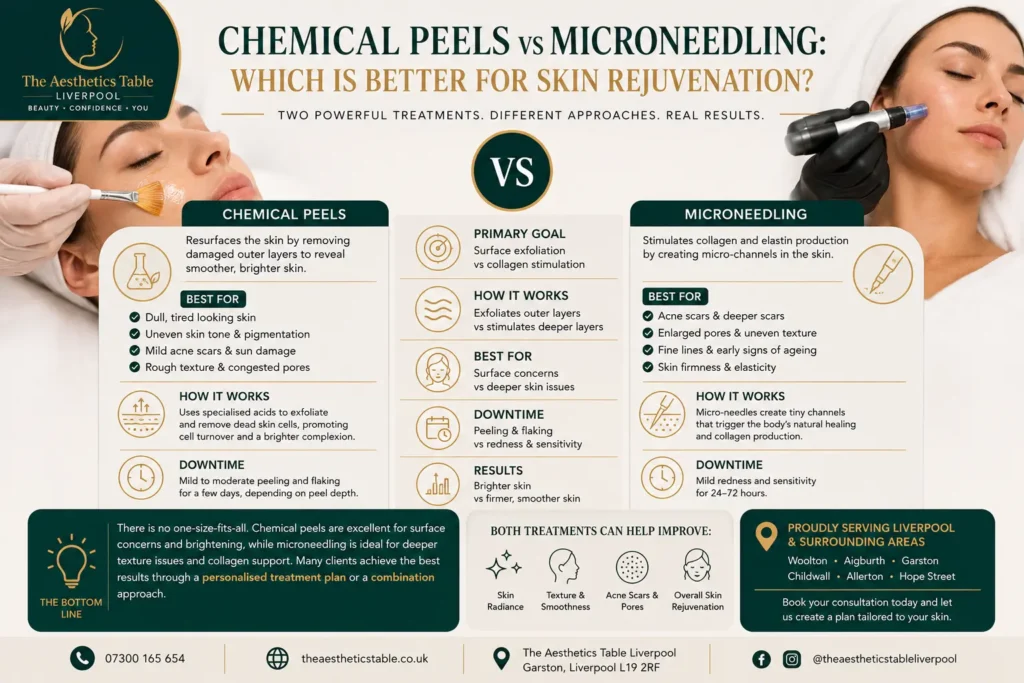
When skin starts looking uneven, dull, or textured, many people begin searching for treatments that support smoother and healthier looking skin without surgery. Two treatments often compared are chemical peels and microneedling. Although both are used for skin rejuvenation, they work differently beneath the skin surface.
One focuses more on controlled exfoliation, while the other encourages collagen stimulation through tiny microchannels in the skin. Understanding Chemical Peels vs Microneedling can help people choose treatments more confidently based on skin concerns, sensitivity, and overall skincare goals.
At The Aesthetics Table Liverpool, treatment recommendations are based on skin condition and long term skin health rather than temporary skincare trends.
How Chemical Peels Work
Chemical peels are resurfacing treatments designed to remove damaged outer skin layers and encourage healthier skin renewal. Different peel strengths may target different concerns depending on skin sensitivity and treatment depth.
Chemical peels are commonly used for:
- dull skin
- uneven tone
- mild acne scarring
- rough texture
- pigmentation
- sun damage
Some treatments focus on gentle skin refreshing, while others are designed for deeper resurfacing and texture improvement. Individuals exploring resurfacing treatments may also be interested in pH Formula Skin Resurfacing Treatment for targeted skin renewal support. When comparing Chemical Peels vs Microneedling, chemical peels are usually more focused on surface exfoliation and improving visible skin brightness.
What Microneedling Does Differently
Microneedling works differently from chemical peels because the treatment focuses more on stimulating collagen production beneath the skin surface. Tiny controlled microchannels are created within the skin to encourage natural skin renewal and support smoother texture over time.
Microneedling is often used for:
- acne scars
- enlarged pores
- uneven texture
- fine lines
- skin firmness
- collagen support
Unlike stronger resurfacing peels, microneedling does not rely on exfoliating away outer skin layers. Some people focused on collagen support and skin regeneration may also explore Nano Needling depending on treatment suitability. A major difference in Chemical Peels vs Microneedling is that microneedling supports collagen production beneath the skin rather than primarily targeting the outer layers.
Chemical Peels vs Microneedling for Acne Scars
Acne scars can vary significantly in depth and severity, which is why treatment suitability often depends on the actual scar type rather than choosing one universal option.
In some situations:
- chemical peels may help improve superficial texture irregularities
- microneedling may help support deeper collagen related skin concerns
When comparing Chemical Peels vs Microneedling, professional skin assessment is important because some individuals may benefit more from combination approaches over time.
Which Treatment Helps More With Dull Skin?
Both treatments may help improve dull skin, although they do so differently.
Chemical peels often focus more on:
- surface brightness
- exfoliation
- pigmentation
- skin clarity
Microneedling generally focuses more on:
- collagen stimulation
- skin texture
- firmness
- deeper skin renewal
For broader skin brightening and rejuvenation support, some individuals may also explore Skin Treatments for Dull Skin and Tired Looking Skin depending on their skin concerns.
Recovery Time Can Differ
Recovery often depends on:
- treatment depth
- skin sensitivity
- skincare habits
- treatment intensity
Some chemical peels may involve visible peeling or dryness for several days, while microneedling commonly causes temporary redness and sensitivity after treatment.
Balanced aftercare usually focuses on:
- hydration
- SPF protection
- gentle skincare
- avoiding harsh exfoliation
The NHS skincare guidance also explains the importance of protecting overall skin health and barrier function.
Skin Sensitivity Matters
Not every treatment suits every skin type equally. Individuals with highly sensitive skin or active inflammation may respond differently depending on:
- skin barrier condition
- redness levels
- active acne
- pigmentation concerns
- previous skincare irritation
This is one reason why comparing Chemical Peels vs Microneedling without professional guidance can sometimes be misleading. Treatment suitability usually depends more on the skin itself than which treatment is more popular online. Some individuals managing visible redness alongside texture concerns may also explore Chronic Redness Treatment.
Combination Treatments Are Sometimes Used
Professional skin treatment plans are not always limited to a single approach. In some cases, combination treatments may help improve:
- uneven texture
- acne scarring
- hydration
- skin brightness
- long term skin quality
A gradual approach often creates more balanced and manageable skin improvement over time rather than aggressively treating the skin all at once. Individuals researching broader rejuvenation support may also look into Skin Rejuvenation Aigburth for ongoing treatment options nearby.
Final Thoughts
Chemical peels vs microneedling is not always about deciding which treatment is universally better. Both treatments work differently and may suit different skin concerns depending on texture, sensitivity, acne scarring, and overall skin condition. Chemical peels often focus more on resurfacing and brightness, while microneedling supports collagen stimulation and texture improvement beneath the surface. Professional assessment can help determine which treatment approach may be most suitable for individual skin goals.
FAQs
What is the difference between chemical peels and microneedling?
Chemical peels focus on resurfacing and exfoliation, while microneedling stimulates collagen production beneath the skin surface.
Which treatment is better for acne scars?
Treatment suitability depends on scar depth and skin condition. Some acne scars respond better to resurfacing, while others benefit from collagen stimulation.
Do chemical peels improve dull skin?
Yes. Chemical peels are commonly used to improve skin brightness, texture, and uneven tone.
Is microneedling good for skin texture?
Microneedling may help improve texture, enlarged pores, and mild acne scarring by supporting collagen renewal.
Which treatment has more downtime?
Recovery depends on treatment depth and skin sensitivity. Some peels may involve peeling, while microneedling often causes temporary redness.
Can chemical peels and microneedling be combined?
In some cases, combination treatment plans may be recommended depending on individual skin concerns and professional assessment.