There are three main acne scar types that sit below the surface of the skin: ice pick, boxcar and rolling scars. Raised scars, and the flat red or brown marks left after spots, are different again. Knowing which you have matters, because each type responds to a different approach, and most people have a mix of more than one.
Why acne leaves scars in the first place
A scar is the skin’s repair job after deep inflammation. When a spot is large, painful or squeezed, the inflammation can damage the collagen that normally supports the skin from underneath. As the area heals, the body either rebuilds too little collagen, which leaves a dip, or too much, which leaves a raised bump.
Most acne scarring is the first kind, often called atrophic scarring. The shape of the dip depends on how deep the damage went and how the tissue tethered as it healed. That is why two people with the same history of breakouts can end up with very different-looking skin.
The three depressed acne scar types
Ice pick scars
Ice pick scars are narrow, deep and sharp-edged, a little like a large open pore or a small puncture. They are usually less than a couple of millimetres wide at the surface but can run deep, narrowing as they go down. They are common on the cheeks and can be the most stubborn type, because surface treatments often struggle to reach the bottom of the scar.
Boxcar scars
Boxcar scars are wider, with steep, defined edges and a flatter base, so they look like small round or oval craters. Shallow boxcar scars tend to respond better than deep ones, because the sharp edge is where light catches and makes the scar visible. Softening that edge can make a noticeable difference.
Rolling scars
Rolling scars have soft, sloping edges and give the skin a wavy or uneven look, especially in side lighting. They form when bands of tissue under the skin pull the surface downwards. They often look worse as skin loses some firmness with age, which is why some people notice them more in their thirties and forties than they did at twenty.
Raised scars and marks that are not true scars
Hypertrophic and keloid scars
Some people heal with raised scars instead of dips. Hypertrophic scars stay within the edges of the original spot, while keloid scars spread beyond it. They are more common on the jawline, chest, back and shoulders, and can feel itchy or tender. These need a different plan from depressed scars, and some approaches used for dips are not suitable for raised scars at all.
Red and brown marks
Flat pink, red or brown marks left after a spot clears are not scars in the textural sense. The skin surface is level; it is the colour that has changed. These marks often fade gradually on their own, particularly with daily SPF, although it can take months. They matter because they are easily confused with scarring, and the treatment focus is on tone, not texture.
A simple way to read your own skin
You do not need to diagnose yourself, but a quick check can help you describe your concerns at consultation:
- Use side lighting. Stand side-on to a window or hold a torch at an angle. Textural scars cast small shadows; flat marks do not.
- Try a gentle stretch. Place two fingers either side of a scar and stretch lightly. Rolling scars often soften noticeably; ice pick and deep boxcar scars usually stay visible.
- Look at the edges. Sharp edges suggest boxcar or ice pick; sloping edges suggest rolling.
- Run a finger over it. If it feels level, you are probably looking at a mark rather than a scar.
A professional assessment is still the most reliable guide, because scar depth and your skin type both shape which treatments are appropriate. A scar revision assessment in Liverpool looks at scar type, age, location and skin condition before recommending anything.
Which treatments may suit each scar type
People searching for the best acne scar treatment in the UK are often hoping for one answer. In practice, the treatment that gets the best results is the one that matches your scar types, and many people need a combination over time. Scars can usually be softened and improved, but complete removal is rarely possible.
| Scar type | What it looks like | Approaches that may help |
|---|---|---|
| Ice pick | Narrow, deep, pinpoint | Targeted, often combined treatment planned at assessment |
| Boxcar | Wide, sharp-edged, flat base | Medium-depth peels, microneedling, resurfacing |
| Rolling | Soft, wavy, sloping edges | Collagen-stimulating treatments such as microneedling |
| Raised | Firm bump above the surface | A separate plan aimed at flattening tissue |
| Red or brown marks | Flat colour change | SPF, peels and tone-focused treatment |
Medium-depth peels for texture and tone
A TCA peel at our Liverpool clinic is a medium-depth chemical peel that works below the surface to renew skin and encourage collagen. It is £250 for a 60-minute session. Shallow boxcar scars and post-acne marks are among the concerns it is used for, and deeper scarring may need it combined with other treatments. Expect around three to seven days of peeling.
Gentler texture and maintenance treatments
Nano needling in Liverpool does not puncture the skin. It focuses on hydration, product absorption, glow and overall smoothness, at £150 for a 60-minute session. It is not designed to lift deep scars, but it can suit people with sensitive skin or mild texture concerns, or as part of a longer plan.
Scar revision programmes
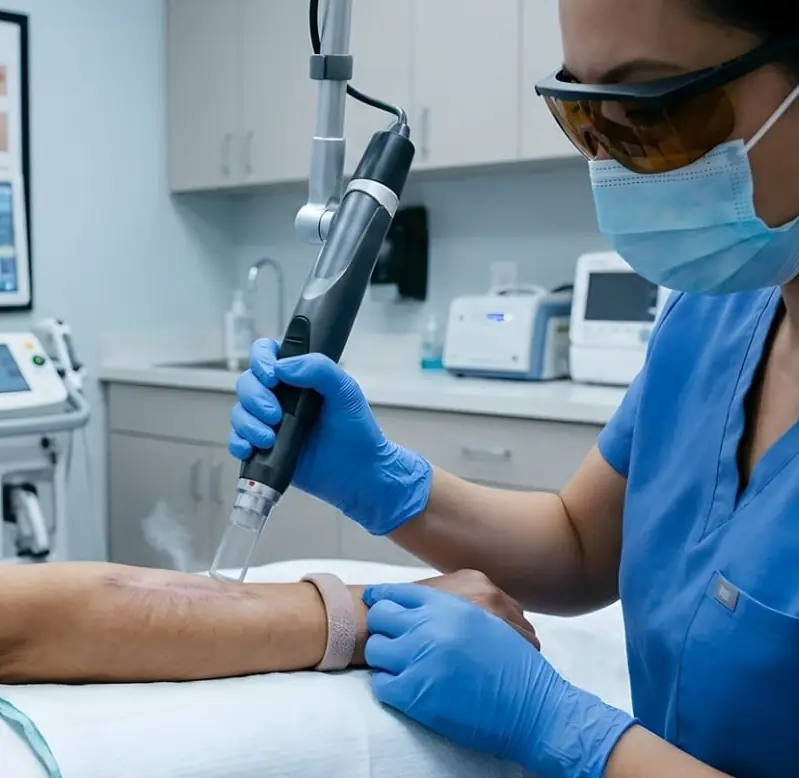
For more noticeable scarring, scar revision plans may involve laser resurfacing, microneedling, chemical peels or a combination. Improvements tend to build over three to six months as collagen remodels. Our guide to acne scar treatments for uneven skin texture covers these options in more depth.
Before you start: timing and safety
- Calm active acne first. Treating scars while new spots are still forming means fresh scars may keep appearing.
- Tell your practitioner about medication, particularly oral acne medicines taken recently, as resurfacing may need to wait.
- Darker skin tones carry a higher risk of pigment change with deeper peels, so a cautious approach and sometimes a patch test is used.
- Treatment is usually postponed if you are pregnant or breastfeeding, or have an active skin infection, cold sore, open wound or irritated skin in the area.
- Expect some reaction. Redness, tightness, dryness and peeling are common after resurfacing. Contact the clinic if you notice increasing pain, swelling, crusting, heat or signs of infection, and see your GP if you feel unwell.
Frequently asked questions
Which acne scar type is hardest to treat?
Ice pick scars are often the most stubborn because they are narrow and deep. Deep boxcar scars can also be slow to improve. Both usually need a planned, combined approach.
Can pimple scars go away on their own?
Flat red or brown marks often fade with time and daily SPF. True textural scars, where the skin is indented, generally do not disappear without treatment, although they can be improved.
What gives the best results for acne scars?
The best results come from matching treatment to scar type and skin type. Many people with mixed scarring see more improvement from a course combining approaches than from any single session.
How many sessions will I need?
It depends on scar severity, scar age and your skin. Some people notice change after one peel, while acne scarring often responds best to a short course agreed at consultation.
Book a consultation in South Liverpool
If you would like your scars assessed properly, we can look at your scar types and talk through realistic options. The clinic is at Business First Centre, Goodlass Road (L24), with parking on site. Book your appointment online or call 0151 804 4207.
This guide is general information and not a substitute for a personal consultation. Suitability for any treatment is assessed individually.