
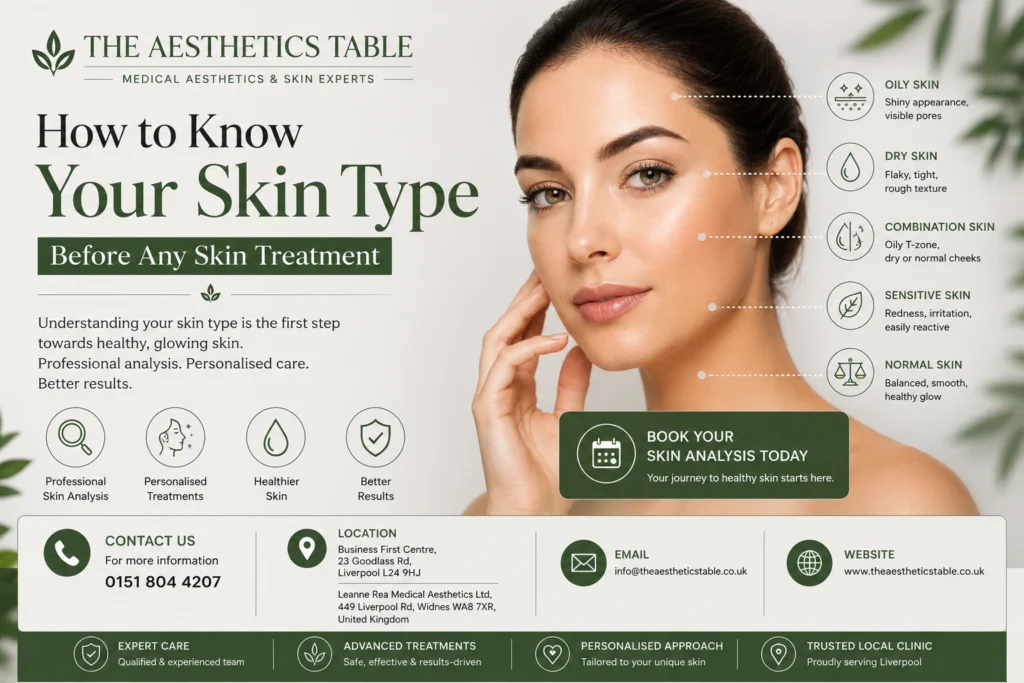
How to know your skin type is one of the most common questions people ask before starting a new skincare routine or professional skin treatment. Understanding your skin type is one of the most important steps in achieving healthy, balanced, and long-lasting results from skincare treatments.
If you have ever asked yourself questions such as “what is my skin type?”, “what skin type do I have?”, or “how do I know my skin type?”, you are not alone. Knowing your skin type helps you choose suitable skincare products, build an effective skincare routine, and select treatments that match your skin’s needs.
Whether you are considering professional facials, skin resurfacing, anti-ageing treatments, or acne treatments, understanding your skin type can help improve both short-term and long-term results. Learning how to know your skin type can help you choose better skincare products and more suitable treatments.
What Is Skin Type?
Skin type refers to the natural characteristics of your skin. It is influenced by genetics, oil production, hydration levels, sensitivity, and environmental factors. Your skin type affects how your skin reacts to products, weather conditions, and professional treatments. Choosing treatments without understanding your skin type may lead to irritation, poor results, or unnecessary skincare expenses.
The five main skin types are:
- Normal skin
- Dry skin
- Oily skin
- Combination skin
- Sensitive skin
While skin type remains relatively stable, skin conditions such as acne, dehydration, redness, or pigmentation can change over time. Understanding how to know your skin type is important because different skin types have different needs.
The Five Main Skin Types
Normal Skin
Normal skin is generally balanced, with neither excessive oiliness nor dryness.
Common characteristics include:
- Smooth texture
- Minimal sensitivity
- Few visible pores
- Consistent hydration levels
Dry Skin
Dry skin produces less natural oil than other skin types.
Common signs include:
- Tightness after cleansing
- Flakiness
- Rough texture
- Increased sensitivity
Dry skin may also make fine lines appear more noticeable due to reduced moisture levels.
Oily Skin
Oily skin produces excess sebum, which can contribute to congestion and breakouts.
Common signs include:
- Shiny appearance
- Enlarged pores
- Frequent blackheads
- Acne-prone skin
Understanding oily skin is particularly important when considering acne-focused treatments and skincare products.
Combination Skin
Combination skin contains both oily and dry areas.
Typically:
- The T-zone appears oily
- Cheeks may feel normal or dry
- Different areas require different skincare approaches
Combination skin often benefits from personalised treatment planning.
Sensitive Skin
Sensitive skin may react more easily to environmental factors, ingredients, or certain treatments.
Common signs include:
- Redness
- Irritation
- Stinging sensations
- Skin reactivity
People with sensitive skin often benefit from professional skin analysis before beginning new treatments.
How to Know Your Skin Type at Home
If you are wondering how to know your skin type or how to check your skin type, a simple at-home test can provide a general indication.
The Bare Face Method
- Cleanse your face with a gentle cleanser.
- Avoid applying products afterwards.
- Wait approximately one hour.
- Observe how your skin feels and appears.
Results
| Observation | Possible Skin Type |
|---|---|
| Comfortable and balanced | Normal |
| Tight or flaky | Dry |
| Shiny throughout | Oily |
| Oily T-zone with dry cheeks | Combination |
| Red, irritated, or reactive | Sensitive |
While this method can be useful, it does not provide the same level of detail as a professional skin assessment.
Why Skin Type Matters Before Treatment
Different skin types often respond differently to treatments.
For example:
- Sensitive skin may require gentler resurfacing treatments.
- Oily skin may benefit from acne-focused treatment protocols.
- Dry skin often requires hydration-focused treatments.
- Combination skin may need a customised treatment plan.
Understanding your skin type allows treatment recommendations to be tailored more accurately, reducing the risk of irritation while improving overall results.
Why Professional Skin Analysis Is More Accurate
At-home observations only reveal part of the picture. Many skin concerns develop beneath the surface before they become visible. A professional skin analysis provides a more accurate understanding of your skin than visual observation alone.
Using advanced skin scanner technology, practitioners can assess:
- Skin hydration levels
- Skin texture
- Pigmentation concerns
- Sensitivity levels
- Congestion
- Early signs of ageing
- Overall skin health
This detailed assessment helps create a more personalised treatment strategy. For more information about skin types and skincare basics, visit the American Academy of Dermatology skincare resource. While online quizzes can help, they are not always the most accurate way of learning how to know your skin type.
Expert Insight
Many people confuse skin type with skin condition. For example, someone may have oily skin but also experience dehydration. Similarly, dry skin can coexist with acne or sensitivity.
This is one reason why professional facial skin analysis is valuable. It helps identify multiple concerns simultaneously, allowing treatments and skincare recommendations to be based on actual skin needs rather than assumptions.
Skin Type vs Skin Condition
Understanding the difference between skin type and skin condition is important.
Skin Type
Usually genetic and long-term:
- Dry
- Oily
- Combination
- Normal
- Sensitive
Skin Condition
Can change over time:
- Acne
- Dehydration
- Redness
- Pigmentation
- Congestion
- Ageing concerns
A professional skin assessment helps identify both.
When Should You Consider Professional Skin Analysis?
Professional skin analysis may be particularly beneficial if:
- You are unsure which treatment is suitable
- You experience recurring breakouts
- You struggle with redness or sensitivity
- You have pigmentation concerns
- You want to improve skin texture
- You are planning anti-ageing treatments
Understanding your skin before treatment often leads to safer and more predictable outcomes. Maintaining healthy skin requires a long-term approach rather than relying on one treatment alone. Learning about common acne triggers can help prevent future flare-ups.
Frequently Asked Questions
What is my skin type?
Your skin type is determined by factors such as oil production, hydration levels, and sensitivity. The most common skin types are normal, dry, oily, combination, and sensitive.
How do I know my skin type?
A simple at-home test can provide clues, but a professional skin analysis offers a more accurate assessment of your skin type and skin condition.
How can I improve skin texture?
Improving skin texture often involves a combination of professional treatments, appropriate skincare products, hydration support, and consistent sun protection.
Why is it important to know your skin type?
Understanding how to know your skin type helps you choose appropriate skincare products, treatments, and long-term skincare strategies.
What skincare products do I need?
The most suitable skincare products depend on your skin type, concerns, and treatment goals. A personalised skincare consultation can help identify the most effective options.
Can skin type change over time?
While your underlying skin type usually remains similar, factors such as age, hormones, climate, and lifestyle can influence how your skin behaves.
Final Thoughts
Knowing your skin type is one of the most important foundations of healthy skin. Whether your goal is clearer skin, improved hydration, reduced redness, or healthier ageing, understanding your skin helps create a more effective treatment and skincare strategy.
A professional skin analysis can provide deeper insight into your skin’s needs, helping you make informed decisions about treatments, products, and long-term skin health.