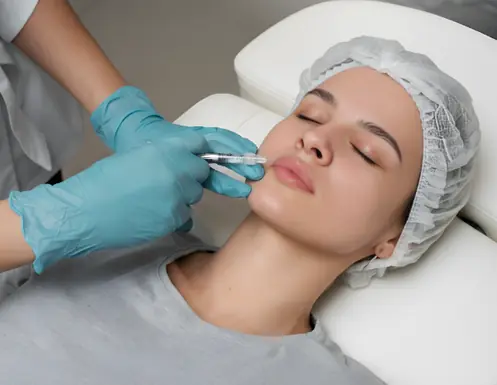
Most people feel fine straight after dermal filler and go back to their day. Even so, the first 24 to 48 hours matter. Good aftercare reduces swelling and bruising, lowers the risk of infection and helps the filler settle where it was placed. This guide covers what to avoid after dermal filler, what is normal while you heal, and the rare warning signs that mean you should contact the clinic straight away.
What to avoid in the first 24 to 48 hours
Touching and pressing the area
Try not to touch, rub or press the treated area unless your practitioner has asked you to. Hands carry bacteria, and pressure can move filler before it settles.
Make-up
Avoid make-up on the treated area for the rest of the day. The tiny injection points are open for a short time, and make-up brushes and products can introduce bacteria.
Strenuous exercise
Avoid strenuous exercise for 24 to 48 hours. Increased blood flow and raised blood pressure can make swelling and bruising worse. A gentle walk is usually fine.
Alcohol
Alcohol widens blood vessels and can increase bruising and swelling, so it is best avoided for at least 24 hours.
Heat
Saunas, steam rooms, hot yoga and very hot baths or showers can increase swelling. Avoid them for at least 48 hours, and avoid strong sun or sunbeds while any swelling or bruising settles.
Sleeping on your face
For the first night, sleeping on your back with your head slightly raised can help reduce swelling and avoids pressure on the treated area.
What to avoid in the first two weeks
- Facials, massage and other facial treatments on or near the area, unless your practitioner has agreed timings
- Laser, peels and radiofrequency treatments on the area, unless planned as part of your treatment
- Dental treatment soon after lip or lower-face filler, where possible, as stretching the mouth and dental work can increase infection risk; let your dentist know if you have had recent filler
- Flying very soon after treatment, if you can avoid it, as pressure changes may increase swelling for some people
If you have an event coming up, it is best to have filler at least two weeks beforehand so any swelling or bruising has time to settle. Our guide to planning treatments before a wedding or event has a full timeline.
What is normal after filler
- Swelling: very common, especially in the lips, and usually worst on day two or three before settling over about a week
- Bruising: small bruises at injection points are common and fade over several days
- Tenderness: the area may feel sore or firm to touch for a few days
- Lumpiness or unevenness: often caused by swelling and usually settles as the filler integrates; if it persists beyond two weeks, contact the clinic
Your final result is usually clearer after about two weeks. A review appointment gives the chance to check how the filler has settled.
Warning signs: contact the clinic straight away
Serious complications are rare, but it is important to recognise them. Contact the clinic immediately, using the number on your aftercare sheet, if you notice:
- Severe or increasing pain, rather than pain that is easing
- Skin that turns white, grey, blue or mottled, or feels cold, in or near the treated area
- Any change in your vision
- Increasing redness, heat, swelling or pus, or a high temperature, which can be signs of infection
- Swelling of the face, lips or tongue with difficulty breathing or swallowing; call 999 in this case
These problems are rare, but early treatment matters, which is why a clinic should always give you a way to reach them after treatment.
Tips to help you heal
- A clean, cool compress wrapped in a cloth can ease swelling; avoid pressing hard
- Stay well hydrated
- Keep the area clean and use gentle skincare
- Take paracetamol for discomfort if needed and suitable for you; ask your practitioner before taking medicines that can increase bruising
Before your appointment
Aftercare starts before treatment. Let your practitioner know about any medicines and supplements you take, upcoming events, dental work or travel, and any history of cold sores, as lip filler can trigger them. If you are unwell on the day, it is usually best to rearrange.
Frequently asked questions
When can I exercise after filler?
Most people can return to strenuous exercise after 24 to 48 hours. Gentle walking is usually fine sooner.
Can I drink alcohol after lip filler?
It is best to avoid alcohol for at least 24 hours, as it can increase swelling and bruising.
When can I wear make-up again?
Usually the next day, once the injection points have had time to close.
Why does my filler look lumpy?
Early lumpiness is usually swelling. Avoid massaging unless advised, and contact the clinic if it has not settled after two weeks.
Book a dermal filler consultation
At The Aesthetics Table, treatment is nurse-led and every patient receives written aftercare and a contact number. Read more on our dermal fillers Liverpool page, book online or call 0151 804 4207.
This guide is general information and not a substitute for the aftercare advice you are given at your appointment. If you are worried after treatment, contact the clinic or seek medical help.