Common rosacea triggers include sun exposure, heat, cold wind, hot drinks, alcohol, spicy food, stress, intense exercise and harsh skincare, but every person’s list is different. Learning your own triggers is the foundation of managing rosacea. Alongside that, in-clinic options such as gentle resurfacing, medical-grade skincare, LED therapy and laser for visible vessels may help calm persistent redness.
What rosacea is, and what it is not
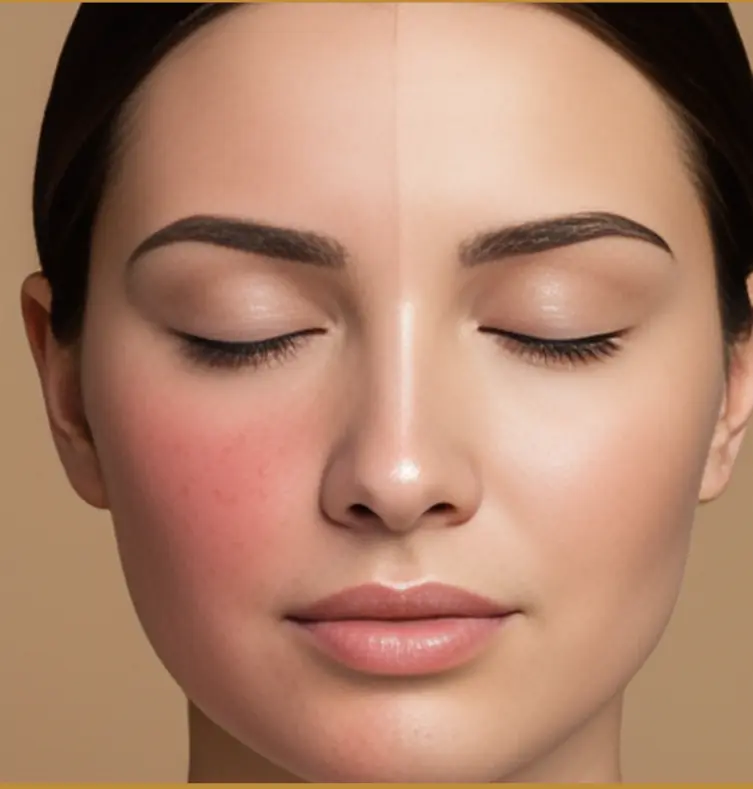
Rosacea is a long-term inflammatory skin condition that mainly affects the central face: the cheeks, nose, chin and forehead. It tends to come and go in flare-ups. It is not caused by poor hygiene and it is not contagious. It can affect all skin tones, although redness may be harder to see on darker skin, where burning, dryness or bumps may be the more noticeable signs. Common signs include:
- flushing or blushing that comes on easily and lingers
- persistent redness across the cheeks and nose
- small visible blood vessels
- red bumps and pus-filled spots, which can be mistaken for acne
- burning, stinging or sensitivity to products
- in some people, gritty, dry or sore eyes, or thickening skin on the nose
Rosacea cannot currently be cured, but for many people it can be well controlled. Trigger management is half of that work.
The most common rosacea triggers
Triggers set off flushing, and repeated flushing is thought to make redness more persistent over time. These are the ones people report most often.
Weather and temperature
- sun exposure, which is one of the most widely reported triggers
- hot weather and humidity
- cold wind and sudden changes in temperature, such as stepping from a cold street into a warm shop
- hot baths, saunas and steam rooms
Food and drink
- alcohol, particularly red wine for many people
- spicy foods and hot sauces
- hot drinks, where the heat itself may be the trigger rather than the caffeine
Lifestyle
- emotional stress and anxiety
- vigorous exercise, especially in hot environments
- some medicines that widen blood vessels
Skincare and products
- fragrance, alcohol-based toners and menthol
- gritty scrubs, cleansing brushes and over-exfoliation
- strong acids or retinoids introduced too quickly
- using steroid creams on the face without medical advice
How to find your personal triggers
Because triggers vary so much, a simple diary is one of the most useful tools you can have. For two to four weeks, note what you ate, drank, did and used on your skin each day, plus the weather, and give your redness a score out of ten. Patterns often appear quickly.
| Date | Food, drink and activity | Weather and products | Flush score (0 to 10) |
|---|---|---|---|
| Monday | Curry, glass of red wine | Cold and windy, new moisturiser | 7 |
| Tuesday | Gym class, iced water | Mild, usual routine | 4 |
Once you know your triggers, you can decide which to avoid and which to manage, such as letting hot drinks cool, exercising in cooler parts of the day or wearing a scarf in the wind. Our guide on reducing redness and sensitive skin naturally has more everyday tips on gentle cleansing and barrier care.
In-clinic treatment options
Trigger management helps prevent flares, while professional treatment can help reduce the redness that is already there. At The Aesthetics Table, our redness and rosacea treatment in Liverpool is tailored after assessment and may combine the following. Sessions take 60 minutes and cost £160, or £800 for a course of 6.
Gentle resurfacing
pH Formula resurfacing is offered in three levels for redness-prone skin. Level 1 is mild and suited to sensitive skin, with slight redness or flaking for 1 to 3 days. Level 2 targets more persistent redness, with 2 to 4 days of possible peeling. Level 3 is intensive, with visible redness or peeling for 3 to 5 days. The level is chosen carefully, as rosacea skin can be reactive.
Medical-grade skincare
A simple, consistent home routine that supports the skin barrier is key. Products are chosen to calm and hydrate rather than strip. For most people with rosacea that means a mild cleanser, a barrier-supporting moisturiser and a daily broad-spectrum SPF, with any active ingredients introduced slowly, one at a time, so you can tell what your skin tolerates.
LED therapy
A gentle, non-invasive light treatment that may help calm inflammation and support the skin’s recovery. It can be added to other treatments.
Laser for visible vessels
Laser can target visible blood vessels, flushing and diffuse redness. Suitability depends on your skin type and the severity of redness.
Many people see the skin looking calmer within a couple of weeks, with further improvement over 6 to 12 weeks. Results vary and maintenance sessions may be suggested.
When treatment should wait, and when to see your GP
In-clinic treatment may not be suitable during a severe flare, if you have an active skin infection, if you have recently had an invasive facial procedure, or, depending on the treatment, if you are pregnant or breastfeeding.
See your GP if you are not sure the redness is rosacea, if spots are widespread or painful, if the skin on your nose is thickening, or if your eyes are red, gritty or sore. Seek urgent help for a painful red eye or changes in your vision. Your GP can also discuss prescription treatments, which can be used alongside clinic care.
Frequently asked questions
Can rosacea be cured?
Not currently, but for many people it can be well controlled with trigger management, gentle skincare and suitable treatment.
Is coffee a rosacea trigger?
For some people the heat of the drink is the issue rather than the caffeine. Try letting it cool and see if your diary shows a difference.
Can I wear make-up with rosacea?
Yes. Choose fragrance-free, non-irritating products and remove them gently at night.
Should I exfoliate rosacea-prone skin?
Avoid scrubs and harsh exfoliation. Any resurfacing should be gentle and guided by a professional.
Book a consultation in South Liverpool
If redness is affecting your comfort or confidence, we can help you understand your triggers and treatment options. Visit us at Business First Centre, Goodlass Road (L24), book a consultation online or call 0151 804 4207.
This guide is general information and not a substitute for a personal consultation. Suitability for any treatment is assessed individually.