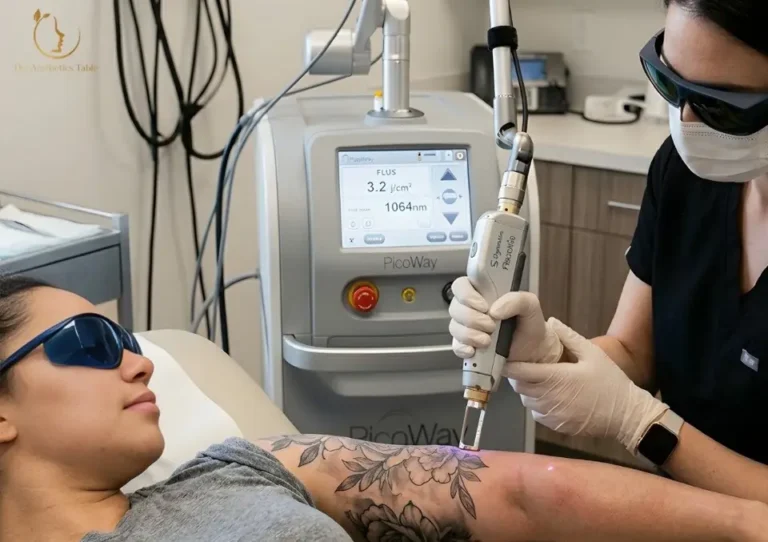
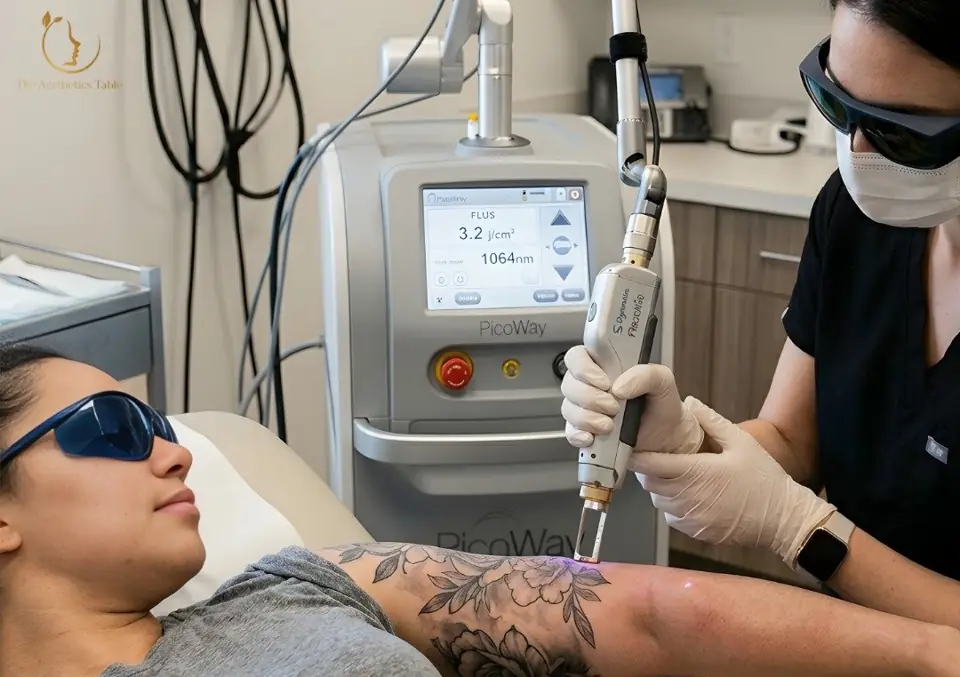
Yes, coloured tattoos can often be lightened with laser, and many fade significantly, but colour changes how predictable coloured tattoo removal is. Black and dark blue usually respond most readily. Red and orange often respond well too. Green, light blue, yellow, white and pastel shades tend to be the most stubborn, and a few pale inks can even darken before they fade.
Why colour changes the picture
Laser tattoo removal relies on ink absorbing light. Each colour absorbs some wavelengths of light strongly and reflects others. Black ink absorbs a very wide range, which is why it is the easiest to target. Coloured inks are pickier: a shade only breaks down well when it is treated with a wavelength it absorbs.
That is why the equipment and settings matter so much for colourful work, and why multicoloured pieces are often treated in stages. Some colours in a design may fade quickly while others lag behind, so the tattoo can look patchy part-way through a course. This is a normal stage rather than a sign that treatment is failing.
How common tattoo colours tend to respond
Every tattoo is different because ink brands, mixes and depths vary, but this gives you a general idea:
| Ink colour | How it often responds | Things to know |
|---|---|---|
| Black and dark grey | Usually the most responsive | Dense professional black can still take a full course. |
| Dark blue | Often responds well | Usually fades alongside black linework. |
| Red, orange, pink | Often responds, sometimes slowly | Red ink is more likely to be linked with allergy, so tell us if the area is itchy or raised. |
| Green and light blue | Frequently stubborn | May need more sessions and still leave a faint shadow. |
| Purple | Variable | Depends on how it was mixed. |
| Yellow | Often very stubborn | Reflects much of the light used to treat it. |
| White, skin-tone, pastels | Least predictable | Can darken on treatment; a test spot is usually advised. |
The darkening risk with pale inks
Some white, flesh-coloured, pale pink and pastel inks contain pigments that can change chemically when exposed to laser energy, turning grey or darker instead of lighter. This is sometimes called paradoxical darkening. It can also happen with some cosmetic tattoos, such as older brow or lip work, which often use these kinds of pigments.
Darkened ink can sometimes be treated further, but it adds time and uncertainty. To reduce the risk, a small test area is usually treated first and checked after it has healed before treating the whole design. If your tattoo includes white highlights or pale shading, mention this at consultation so it can be planned around.
Realistic outcomes for colourful tattoos
For many people, the goal shapes what counts as success:
- Fading enough for a cover-up: often achievable for colourful designs, since your artist only needs the old work to be lighter.
- Significant lightening: a common result, where the design becomes much less noticeable.
- Full clearance: possible in some cases, but stubborn colours may leave a faint trace or ghost image even after many sessions.
Because of this uncertainty, it helps to go in with flexible expectations and review progress every few sessions. Our guide to laser tattoo removal sessions and what affects results covers the other factors, from tattoo age to location on the body, that sit alongside colour.
How a multicoloured piece is usually planned
- Photograph the tattoo and note each colour and any white or pale areas.
- Treat a small test area if pale or cosmetic inks are present, then check it once healed.
- Work on the darker linework and responsive colours first.
- Review progress every few sessions and adjust the approach for colours that are lagging.
Skin tone and colour removal
Your natural skin tone affects which settings are safe to use. Melanin in the skin also absorbs laser light, so in darker skin types there is a greater chance of temporary lightening or darkening of the surrounding skin. This does not necessarily rule treatment out, but it means settings are chosen conservatively and the course may be slower. A tan has a similar effect, which is why treatment is usually paused if you have recently been in the sun.
Safety: who should wait, and side effects to expect
Treatment may need to wait if you are pregnant or breastfeeding, have a tan, sunburn or infection over the tattoo, have a history of keloid scarring, or take medicines that increase light sensitivity. Let us know if your tattoo has ever been raised, itchy or swollen, as this can point to an ink allergy that needs a more cautious approach.
After treatment, redness, swelling, blistering and scabbing are common and usually settle as the skin heals. Keep the area clean, avoid picking, and protect it from the sun. Contact the clinic if the area becomes hot, increasingly painful or weepy, or if you develop a rash or swelling beyond the tattoo. Seek urgent medical help if you have any difficulty breathing or swelling of the face or lips.
You can find prices by tattoo size and more about the treatment on our laser tattoo removal Liverpool page.
Frequently asked questions
Is coloured ink harder to remove than black?
Usually, yes. Black absorbs the widest range of laser light. Many colours respond more slowly, and some need more sessions.
Can white tattoo ink be removed?
Sometimes, but white ink is unpredictable and can darken. A test spot is normally treated first to check how it reacts.
Can cosmetic brow or lip tattoos be treated?
They can be assessed, but cosmetic pigments carry a higher risk of darkening, so they are approached cautiously with a test area first.
Will a colourful tattoo need more than a course of 8?
It may. Some reach the goal within a course, while stubborn shades need further sessions. Progress is reviewed as you go.
Book a consultation in South Liverpool
Bring your tattoo to us for an honest assessment of how its colours are likely to respond. We are at Business First Centre, Goodlass Road (L24). Book a consultation online or call 0151 804 4207.
This guide is general information and not a substitute for a personal consultation. Suitability for any treatment is assessed individually.