When weighing up a lash lift vs extensions, the main difference is simple: a lash lift curls and lifts the lashes you already have, while extensions add individual fibres to make lashes longer or fuller than they naturally are. A lift is lower maintenance and lasts weeks without top-ups; extensions give more drama but need regular infills.
How each treatment works
LVL lash lift
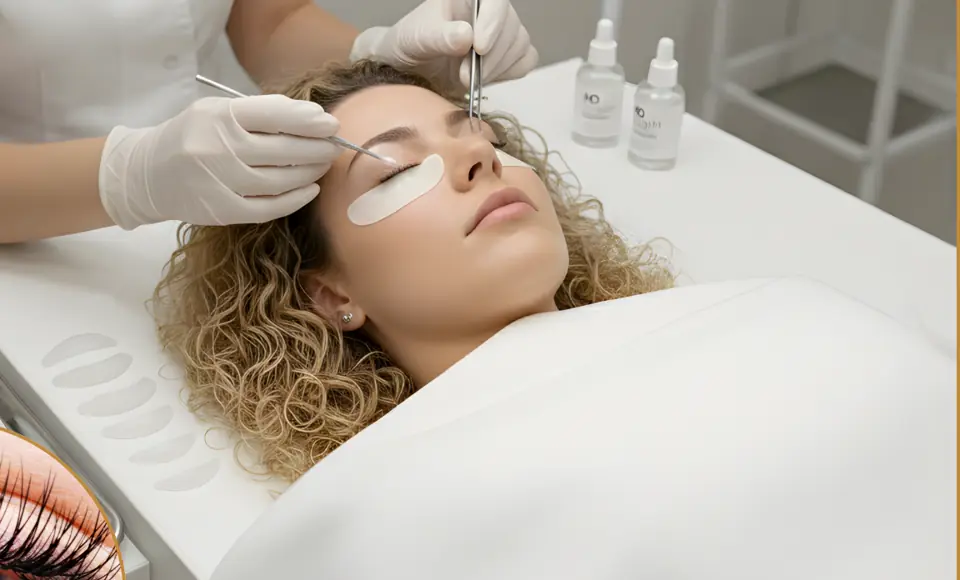
LVL stands for length, volume and lift. Your natural lashes are cleansed, then combed up and over a soft silicone shield on the eyelid. A lifting solution softens the lash so it can take on the new curved shape, and a setting solution fixes it in place. A tint is often added so the tips, which are usually paler, become visible. Nothing is glued on, so what you see at the end is your own lashes, just standing up and appearing longer.
At our clinic, an LVL lash lift in Liverpool takes around 60 minutes and includes a consultation, cleansing, the lift itself, optional tinting and a conditioning finish.
Lash extensions
Extensions are individual synthetic fibres, or small fans of very fine fibres, bonded one at a time to your natural lashes with a specialist adhesive. Because the length, thickness and curl of each fibre can be chosen, extensions can create anything from a soft natural look to a full, dramatic set. They shed as your own lashes do, which is why regular infill appointments are needed to keep the set looking full.
The Aesthetics Table offers LVL lash lifts rather than extensions, so if you have your heart set on extra length or volume, a specialist lash technician is the right person to see.
Side-by-side comparison
| LVL lash lift | Lash extensions | |
|---|---|---|
| What it does | Lifts and curls your own lashes from the root | Adds fibres to increase length and volume |
| Look | Natural, wide-awake, “my lashes but better” | Anything from natural to dramatic |
| How long it lasts | Around 6 to 8 weeks, depending on your lash cycle | Lasts with regular infills, often every few weeks |
| Upkeep | No infills; repeat when lashes grow out | Infill appointments plus careful daily care |
| Mascara | Can be worn after the first 24 hours | Usually not needed; some products affect the bond |
| Best for | Straight or downward lashes of reasonable length | Short, sparse lashes or people wanting extra fullness |
Which suits you? A quick decision guide
A lash lift may suit you if:
- Your lashes are a decent length but grow straight or point down
- You want to stop using an eyelash curler every morning
- You like a low-maintenance routine without regular top-ups
- You swim, go to the gym or sleep on your front and want something that does not mind
- You prefer a natural finish that still looks like you
Extensions may suit you better if:
- Your natural lashes are short or sparse and you want visible extra length
- You want a fuller, more dramatic look for everyday wear or an event
- You are happy to book regular infills and follow daily care routines
- You enjoy being able to change the style from set to set
Neither is better in every situation. Extensions can achieve a look that a lift cannot, because a lift can only work with the length you already have. A lift, on the other hand, avoids the ongoing appointments and the adhesive.
Making a lift more noticeable
If your lash tips are fair or you find a standard tint too subtle, the LVL Colour Boost combines the lift with a deeper tint for darker, more defined lashes. The appointment is around 60 minutes with a 30-minute follow-up. For a complete eye-area refresh, the HD Brows and LVL lash transformation pairs brow mapping, shaping and tinting with a lash lift in one 75-minute appointment. Current prices are listed on each treatment page.
Safety, suitability and lash health
Both treatments involve products used close to the eye, so suitability matters. A lash lift may not be suitable if you have:
- An active eye infection, such as conjunctivitis or a stye
- Severe eye sensitivity or a known allergy to lash or tint products
- Very weak, brittle or damaged lashes
- Recent eye surgery
- Lash extensions still in place, or only recently removed
A patch test may be carried out before your appointment, particularly if you have not had a lift or tint before or have sensitive skin. Common short-lived effects include slight watering or mild redness around the eyes. If you notice swelling, persistent itching, pain or changes in your vision, contact the clinic straight away and seek medical advice.
For extensions, it is sensible to ask your technician about patch testing for the adhesive, how they protect your eyes during application, and how the set should be removed. Removing extensions yourself by pulling or picking can take natural lashes with them.
Aftercare for a lash lift
There is no downtime, but the first day matters for how long the curl holds:
- Keep lashes away from water and steam for 24 hours
- Skip mascara for the first 24 hours
- Avoid rubbing your eyes or sleeping face-down that first night
- After that, use a gentle, oil-free eye make-up remover
Most people enjoy their lift for around six to eight weeks, until the lifted lashes naturally shed and newer, straighter ones grow through.
Frequently asked questions
Can I have a lash lift if I have had extensions?
Yes, but not straight away. Extensions need to be professionally removed and your lashes given time to recover before a lift.
Does a lash lift damage your natural lashes?
When carried out carefully on healthy lashes and not repeated too often, a lift is well tolerated by most people. Very weak lashes are not treated.
Which lasts longer, a lash lift or extensions?
A lift lasts around six to eight weeks with no top-ups. Extensions can be kept going indefinitely, but only with regular infills.
Do you offer lash extensions?
No. We offer LVL lash lifts and LVL Colour Boost, which enhance your own lashes without adhesive.
Book a consultation in South Liverpool
If a natural, low-maintenance lift sounds right for you, visit us at Business First Centre, Goodlass Road (L24). Book your lash appointment online or call 0151 804 4207 with any questions.
This guide is general information and not a substitute for a personal consultation. Suitability for any treatment is assessed individually.