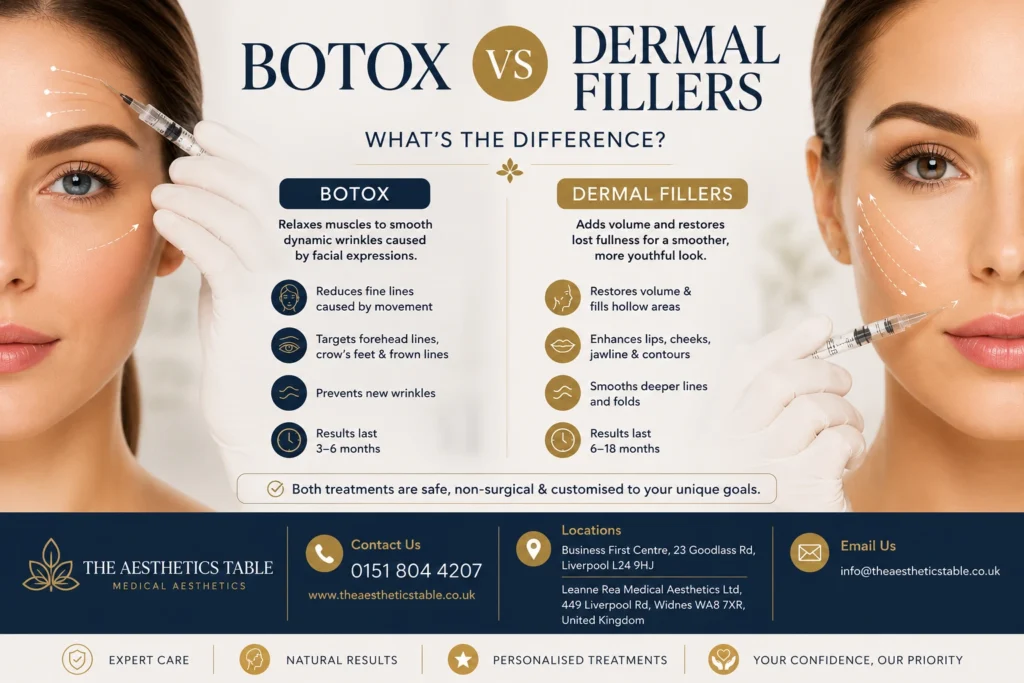
Many people researching cosmetic treatments eventually ask the same question: Botox vs dermal fillers, what’s the difference?
Although both treatments are commonly used for facial rejuvenation, they work in completely different ways and are designed to target different concerns. Understanding how each treatment works can help people make more informed decisions based on their skin concerns, treatment goals, and desired results.
At The Aesthetics Table Liverpool, treatment recommendations are tailored around individual facial structure, skin condition, and long term aesthetic goals rather than a one size fits all approach. Many people researching facial rejuvenation treatments compare Botox vs Dermal Fillers when deciding which option may suit their skin concerns and aesthetic goals best.
What Is Botox?
Botox is an anti wrinkle treatment designed to help reduce the appearance of dynamic lines caused by repeated facial movement. These lines often develop gradually over time through expressions such as smiling, frowning, or squinting. Botox works by temporarily relaxing specific facial muscles, helping the skin appear smoother and softer in treated areas.
Common areas treated with Botox include:
- forehead lines
- frown lines
- crow’s feet
- brow area
- chin dimpling
People exploring professional anti ageing options can also learn more about Wrinkle Reduction Treatment.
What Are Dermal Fillers?
Dermal fillers are designed to restore volume, improve facial contours, and enhance certain facial features. Unlike Botox, fillers do not relax muscles. Instead, they add structure and support beneath the skin.
Fillers are commonly used to help:
- restore lost facial volume
- enhance lips
- improve cheek definition
- soften deeper folds
- contour the jawline
- improve facial symmetry
Many people researching facial enhancement options also explore Dermal Fillers for additional information about treatment areas and suitability.
Botox vs Dermal Fillers: Key Differences
Although Botox and dermal fillers are often discussed together, they target different types of ageing concerns. Understanding the main differences between Botox vs Dermal Fillers can help people choose treatments more confidently based on facial structure, ageing concerns, and desired results.
Botox is commonly used for:
- expression lines
- dynamic wrinkles
- prevention focused anti ageing
- smoothing movement related lines
Dermal fillers are commonly used for:
- volume loss
- contouring
- facial definition
- deeper static lines
- feature enhancement
In many cases, treatment recommendations depend on:
- age
- skin condition
- facial anatomy
- treatment goals
- volume loss
- muscle movement patterns
Which Treatment Lasts Longer?
Treatment longevity varies depending on:
- the product used
- treatment area
- metabolism
- lifestyle factors
- skin condition
Botox results are often temporary and may gradually soften over several months as muscle movement slowly returns. Dermal fillers can sometimes last longer depending on the area treated and the type of filler used. Areas with more movement may break down filler more quickly than less mobile areas.
People researching long term skin maintenance may also find Anti-Ageing Treatment useful when exploring broader facial rejuvenation options.
Can Botox and Dermal Fillers Be Combined?
Yes. In many cases, Botox and dermal fillers are combined as part of a personalised facial rejuvenation approach.
Because the treatments work differently, they can often complement one another by addressing:
- muscle movement
- fine lines
- volume loss
- facial balance
- skin ageing concerns
Some people choose combination treatments to create a softer and more balanced overall result while maintaining natural facial movement.
Which Treatment Looks More Natural?
Natural looking results usually depend more on:
- treatment planning
- facial assessment
- product placement
- practitioner experience
- realistic expectations
Both Botox and dermal fillers can look natural when treatment is tailored appropriately to the individual.
Modern aesthetic treatments are often focused on:
- subtle enhancement
- facial balance
- skin quality
- natural movement
- softer rejuvenation
rather than dramatic changes.
Are Botox and Fillers Suitable for Everyone?
Not every treatment suits every individual. Suitability often depends on:
- medical history
- skin condition
- facial anatomy
- pregnancy status
- treatment goals
- existing skin concerns
A professional consultation helps determine which treatment approach may be most appropriate based on individual concerns and expectations. People interested in improving overall skin texture and hydration may also explore Skin Booster Treatment as part of a broader skincare approach.
Risks and Aftercare Considerations
Like all cosmetic procedures, both Botox and dermal fillers may involve temporary side effects such as:
- redness
- swelling
- tenderness
- mild bruising
Following suitable aftercare guidance can help support recovery and minimise unnecessary irritation after treatment. The NHS also provides general guidance about cosmetic procedures and treatment safety through the NHS cosmetic procedures information.
Choosing the Right Treatment for Your Goals
The choice between Botox vs dermal fillers often depends on what concerns are being treated. When comparing Botox vs Dermal Fillers, the best option often depends on whether the goal is reducing expression lines or restoring lost facial volume.
Botox may be more suitable for:
- forehead lines
- frown lines
- crow’s feet
- prevention focused anti ageing
Dermal fillers may be more suitable for:
- lip enhancement
- facial contouring
- cheek volume
- jawline definition
- deeper folds and hollow areas
In many cases, the best approach comes from understanding facial balance rather than treating individual lines alone. People researching broader facial rejuvenation support may also find Professional Skin Treatments in Garston useful when exploring long term skincare options.
Final Thoughts
Understanding the difference between Botox vs dermal fillers can help people choose the most suitable treatment for their skin concerns and aesthetic goals. Botox is commonly used to soften movement related lines, while dermal fillers help restore volume and facial definition. Both treatments work differently but can often complement each other as part of a personalised facial rejuvenation approach. Professional assessment and realistic treatment planning are important for achieving balanced and natural looking results.
FAQs about Botox vs Dermal Fillers
What is the main difference between Botox and dermal fillers?
Botox helps relax muscles that create expression lines, while dermal fillers add volume and structure beneath the skin.
Which is better, Botox vs Dermal Fillers?
The better treatment depends on individual concerns, facial anatomy, and treatment goals because Botox and fillers are designed to target different types of ageing concerns.
Which lasts longer, Botox or fillers?
Results vary depending on the treatment area and product used, but dermal fillers may sometimes last longer than Botox in certain areas.
Can Botox and fillers be combined?
Yes. Many people combine Botox and dermal fillers as part of a broader facial rejuvenation approach.
Do Botox or fillers look more natural?
Natural results usually depend on treatment planning, product placement, and individual facial anatomy rather than the treatment itself.
Are Botox and dermal fillers painful?
Most people describe treatment discomfort as mild and temporary, although experiences can vary depending on the treatment area and individual sensitivity.
How do I know which treatment is right for me?
A professional consultation helps assess facial structure, skin concerns, and treatment goals to determine the most suitable approach.