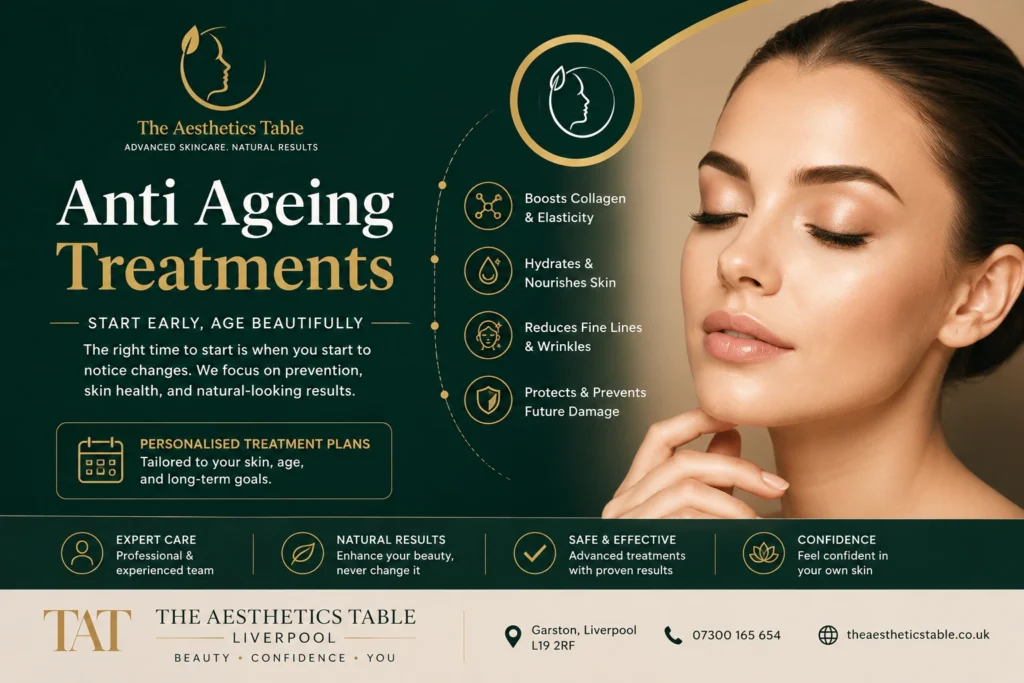
Most people do not suddenly wake up with visible skin ageing. Changes usually appear slowly through differences in hydration, texture, elasticity, and skin brightness over time.
For some, the first signs may be:
- fine lines around the eyes
- dull skin
- uneven texture
- reduced firmness
- dehydration
- tired looking skin
The timing varies because skin ageing is influenced by far more than age alone. Lifestyle habits, sun exposure, stress, sleep quality, and genetics all contribute to how the skin changes over time. Modern Anti Ageing Treatments are often focused on prevention and long term skin quality rather than dramatic cosmetic changes.
At The Aesthetics Table Liverpool, treatment recommendations are based on individual skin concerns and realistic skincare goals rather than trends or age categories.
Your 20s: Prevention and Skin Maintenance
During the twenties, collagen production is still relatively strong, but environmental damage can already begin affecting the skin beneath the surface. This stage is usually less about correction and more about protecting skin quality long term.
Healthy habits during this period often include:
- SPF protection
- hydration
- gentle skincare
- barrier support
- avoiding excessive sun exposure
Some individuals also explore professional hydration focused treatments to help maintain smoother looking skin and improve overall skin quality. For example, treatments such as Skin Booster Treatment may help support hydration and natural skin radiance without dramatically changing facial appearance.
What Typically Changes in Your 30s?
The thirties are often when collagen reduction becomes more noticeable. Expression lines may linger longer after facial movement, and the skin may gradually lose some elasticity and brightness.
At this stage, Anti Ageing Treatments are commonly used to support:
- skin firmness
- fine lines
- hydration
- texture
- preventative wrinkle management
Stress, lack of sleep, and long term UV exposure may also start showing more visibly through the skin. Some people begin considering professional options like Wrinkle Reduction Treatment to help soften repeated facial movement while maintaining natural expressions.
Skin Changes Become More Noticeable With Time
As the skin continues ageing naturally, collagen and elastin production gradually slow further. This may contribute to:
- deeper lines
- rougher texture
- reduced elasticity
- uneven skin tone
- thinner looking skin
Treatment approaches often become more personalised during this stage because skin concerns vary significantly between individuals. Rather than focusing only on wrinkles, many modern Anti Ageing Treatments aim to improve overall skin quality and support healthier looking skin naturally.
Some people combine injectable treatments with advanced skin rejuvenation approaches such as Laser Skin Rejuvenation Treatment to support smoother texture and overall skin renewal.
Skincare Habits Matter More Than Age Alone
Two people of the same age can have completely different skin concerns depending on lifestyle habits and long term skincare routines.
Factors that commonly affect visible ageing include:
- UV exposure
- smoking
- dehydration
- stress
- inconsistent skincare
- poor sleep quality
Daily SPF remains one of the most important preventative skincare habits because sun damage contributes significantly to premature skin ageing. The NHS sun protection guidance explains how UV exposure can affect long term skin health and visible ageing.
Anti Ageing Treatments Are Not Only About Wrinkles
A common misconception is that anti ageing treatments only focus on removing lines. In reality, many treatments are designed to improve:
- hydration
- skin texture
- elasticity
- dullness
- skin tone
- overall skin quality
The goal is often fresher, healthier looking skin that still feels natural and balanced. Individuals looking for broader skin rejuvenation support sometimes explore options available through Anti-Ageing Treatment depending on their concerns and long term skincare goals.
Knowing When Professional Advice May Help
There is no “perfect” age to begin professional skincare treatments. Some people prefer early preventative support, while others wait until visible concerns become more noticeable.
Professional consultations can help assess:
- skin condition
- hydration levels
- texture concerns
- preventative options
- suitable treatment approaches
- realistic expectations
Long term skin maintenance usually works best when treatments are tailored around individual skin behaviour rather than general age recommendations. Clinics offering Professional Skin Treatments in Garston may also help individuals build more personalised skincare plans over time.
Final Thoughts
Anti ageing treatments are increasingly focused on prevention, skin quality, and long term skin health rather than dramatic cosmetic changes. The right age to start depends on individual skin condition, lifestyle, and personal skincare priorities rather than a fixed number. Consistent skincare habits, SPF protection, and professional guidance can all help support healthier looking skin over time. A personalised approach usually creates more natural and balanced long term results.
FAQs
What age should you start anti ageing treatments?
There is no exact age because skin ageing varies between individuals. Some people begin preventative treatments earlier, while others wait until visible signs of ageing appear.
Are anti ageing treatments suitable in your 20s?
Some hydration and preventative skin treatments may be suitable depending on individual skin concerns and skincare goals.
What are the early signs of skin ageing?
Fine lines, dullness, uneven texture, dehydration, and reduced elasticity are some common early signs.
Is SPF important for preventing skin ageing?
Yes. Daily SPF helps protect the skin from UV damage and premature ageing caused by sun exposure.
Can lifestyle habits affect skin ageing?
Yes. Factors such as stress, smoking, dehydration, sleep quality, and UV exposure all influence how the skin ages.
Are anti ageing treatments only for wrinkles?
No. Many treatments also focus on hydration, skin texture, elasticity, and overall skin quality.